 Sign in
Sign in
Price: 3999 EUR
≈ 0 USD
≈ 0 RUB
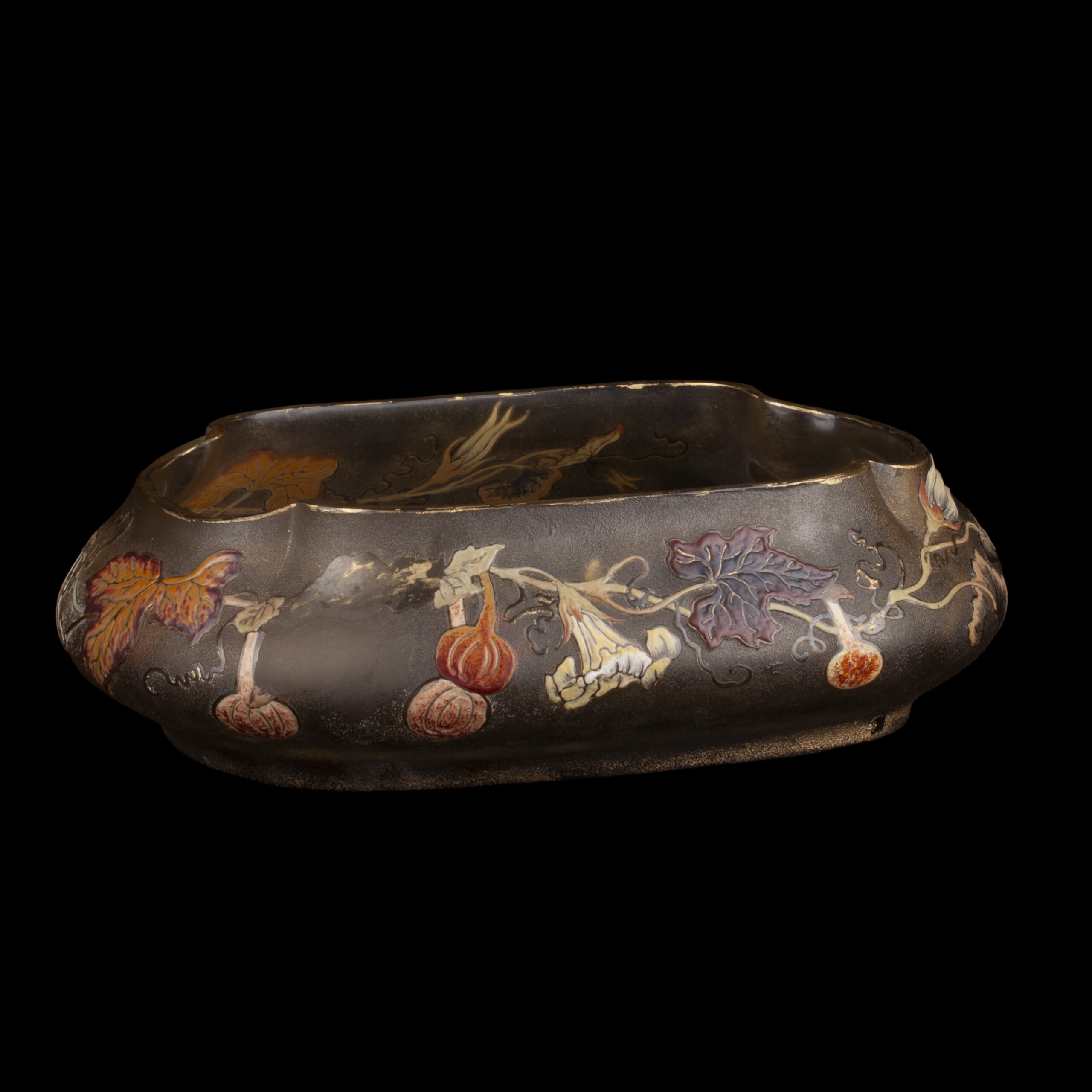
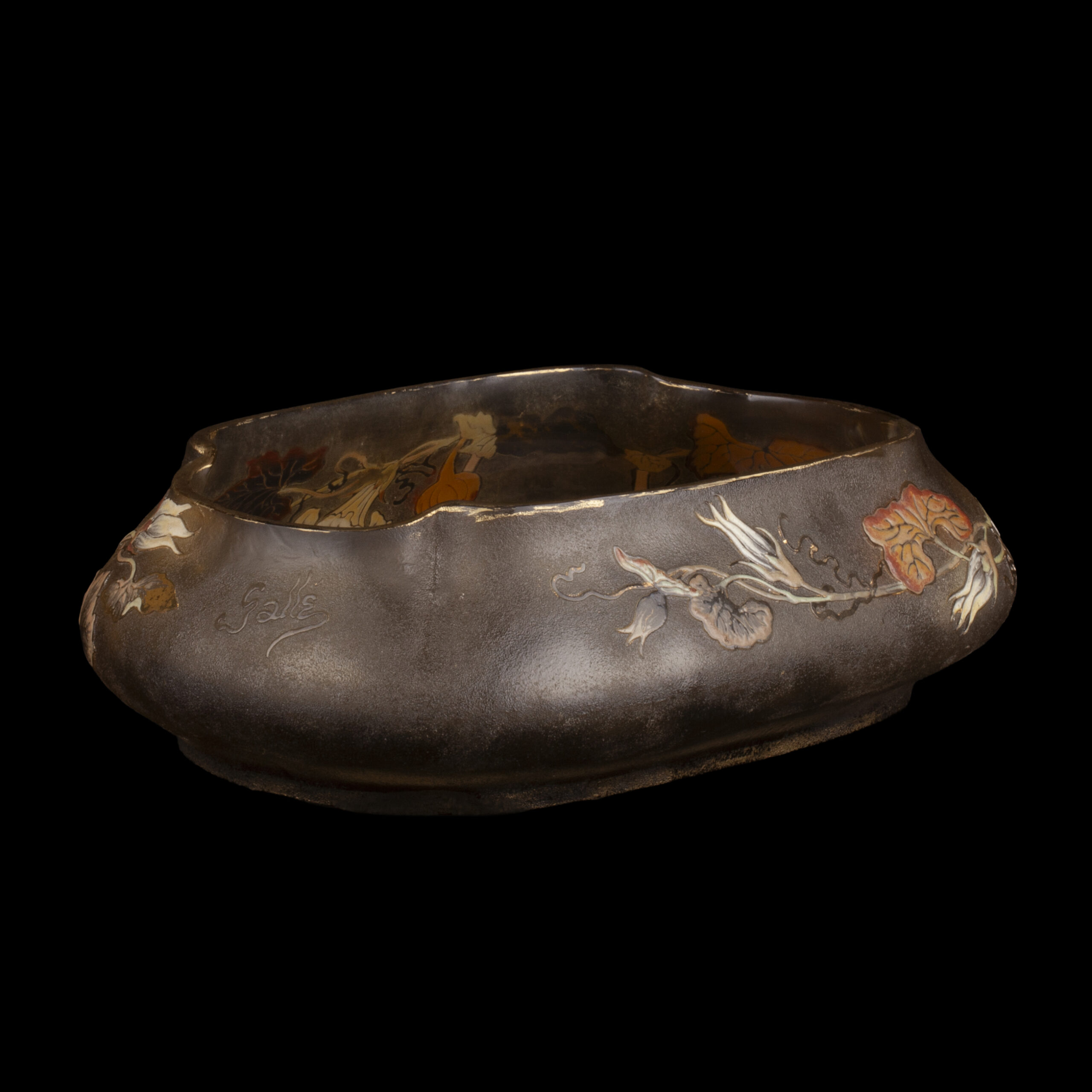
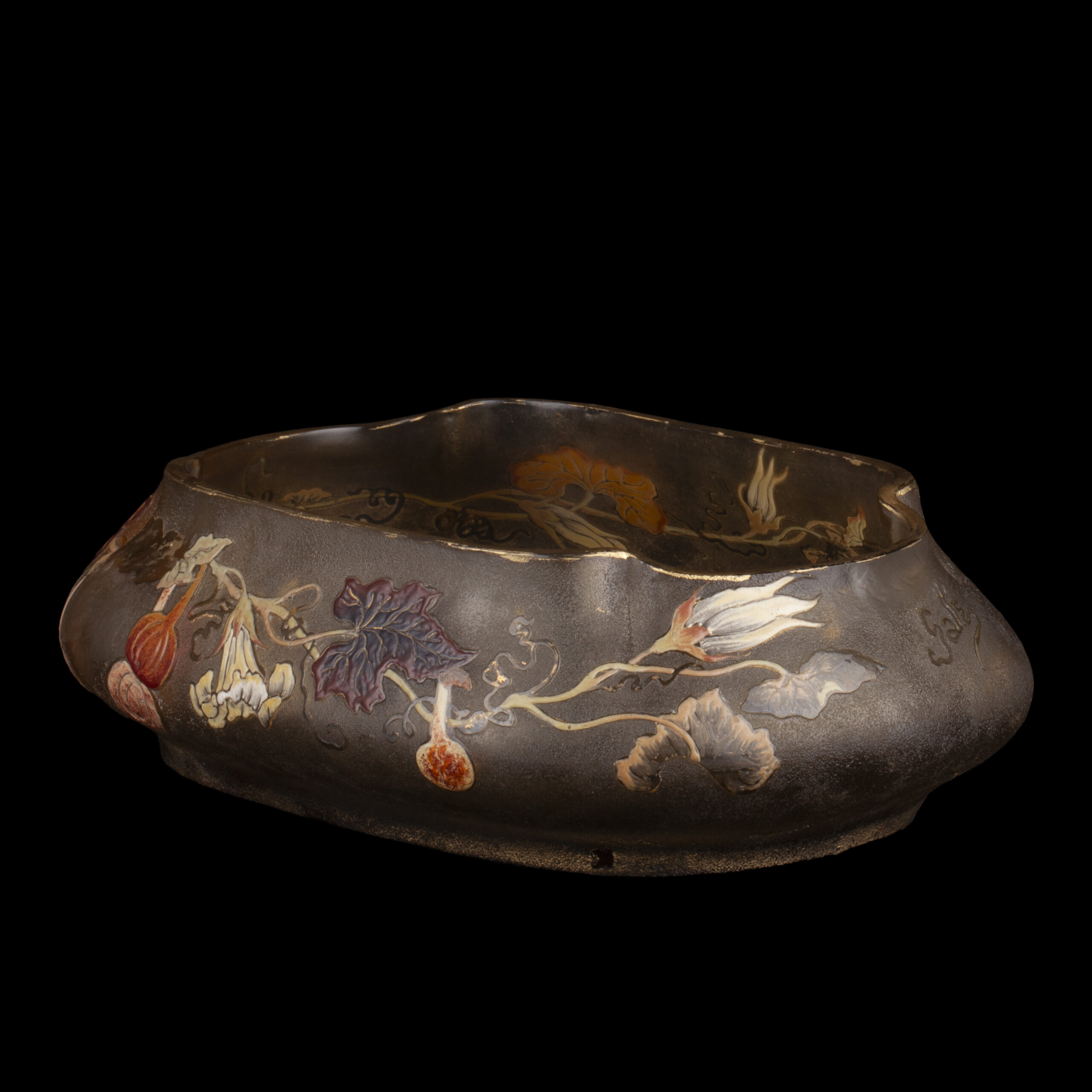
An exceptional and unusually large oval Art Nouveau glass bowl by Émile Gallé, Nancy, France, circa 1900.
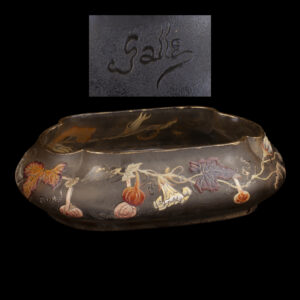
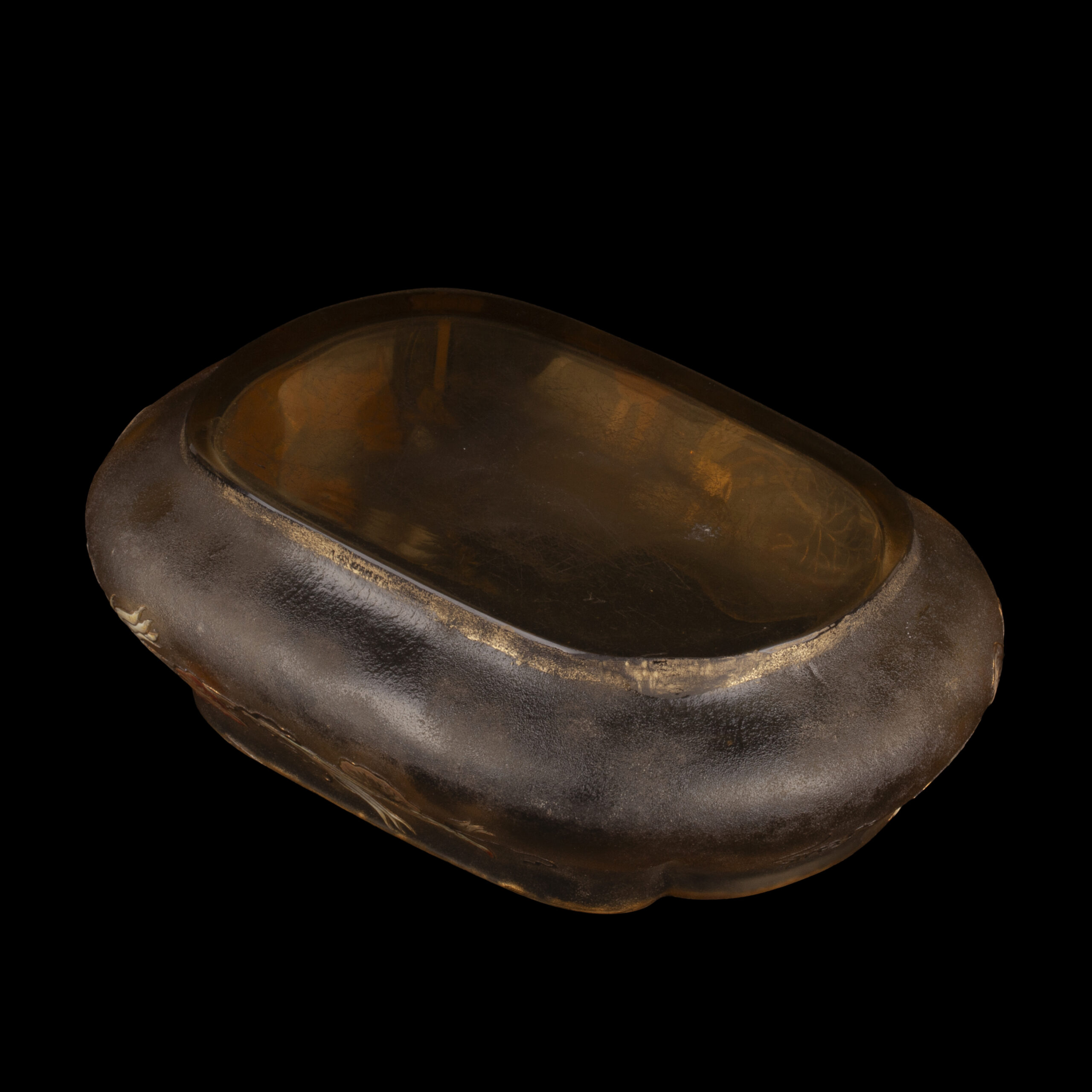
The bowl is of broad, gently flattened oval form, with a softly undulating, irregular upper rim and a substantial glass body. Its exterior has a deep smoky-brown to bronze-toned appearance, enriched by a finely textured, matte surface that creates a striking background for the naturalistic decoration.
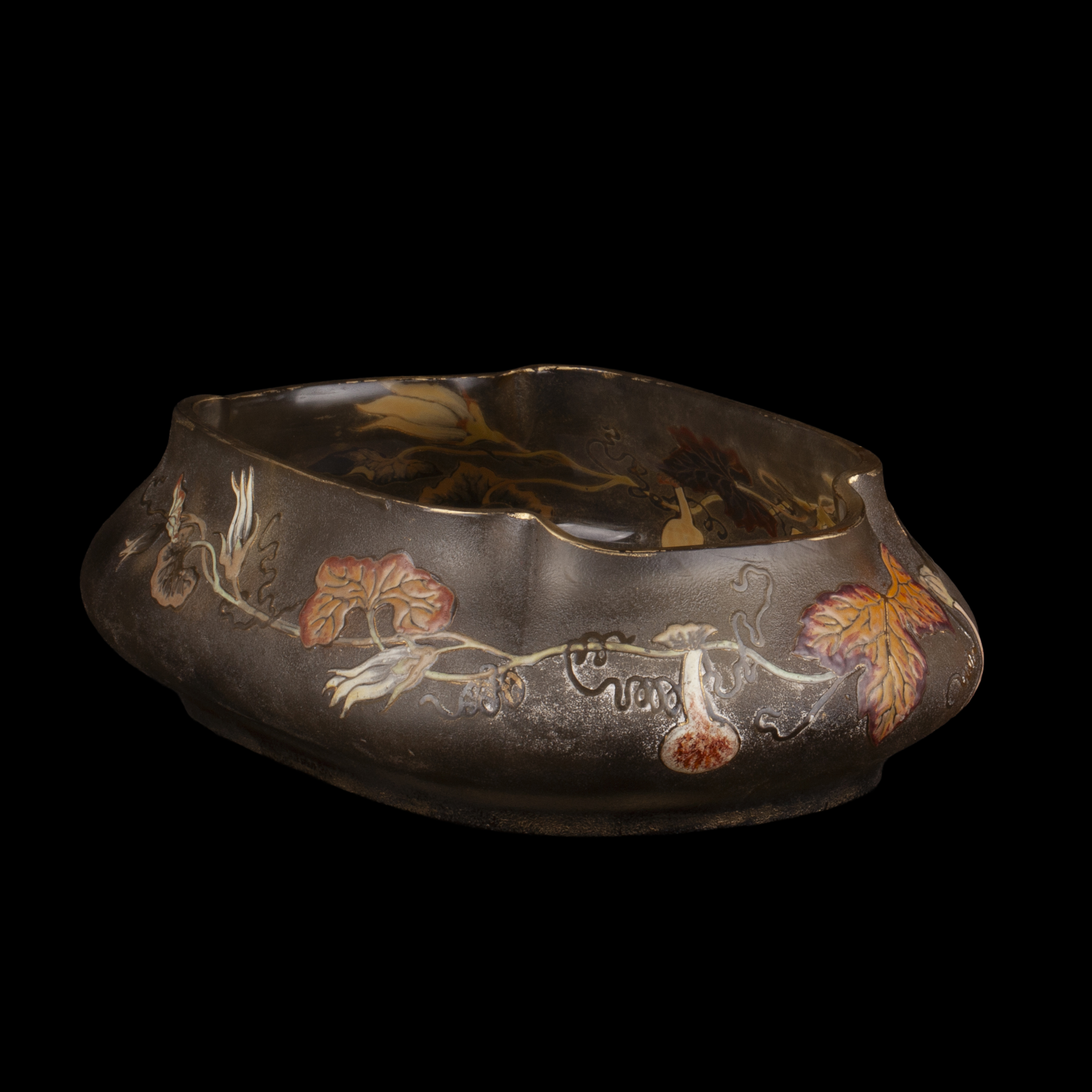
The vessel is decorated with an elaborate polychrome botanical composition depicting a pumpkin vine, with small rounded pumpkins and gourds hanging from gracefully curling stems. The fruits are rendered in warm shades of orange, russet, red and cream, accompanied by large autumnal leaves in amber, violet, muted blue and reddish-brown tones.
Delicate tendrils twist and intertwine across the surface, while small blossoms, buds and organically shaped leaves complete the composition. The fine modelling of the botanical motifs creates subtle contrasts between the coloured decoration and the darker background.
The artist has skilfully used the elongated oval shape of the vessel to develop a continuous decorative scene, allowing the vine to extend around its circumference.
The decoration also continues along the inside walls, where floral and botanical details are visible beneath the irregular upper edge. This treatment gives the bowl a particularly sophisticated artistic character, as the design can be appreciated from above as well as from every side.
The undulating rim, restrained dark colouring and richly varied autumnal palette evoke the organic forms of nature and the transition between the seasons.
The work demonstrates the aesthetic principles of Art Nouveau, in which decoration and the shape of the object were conceived as parts of a unified artistic composition.
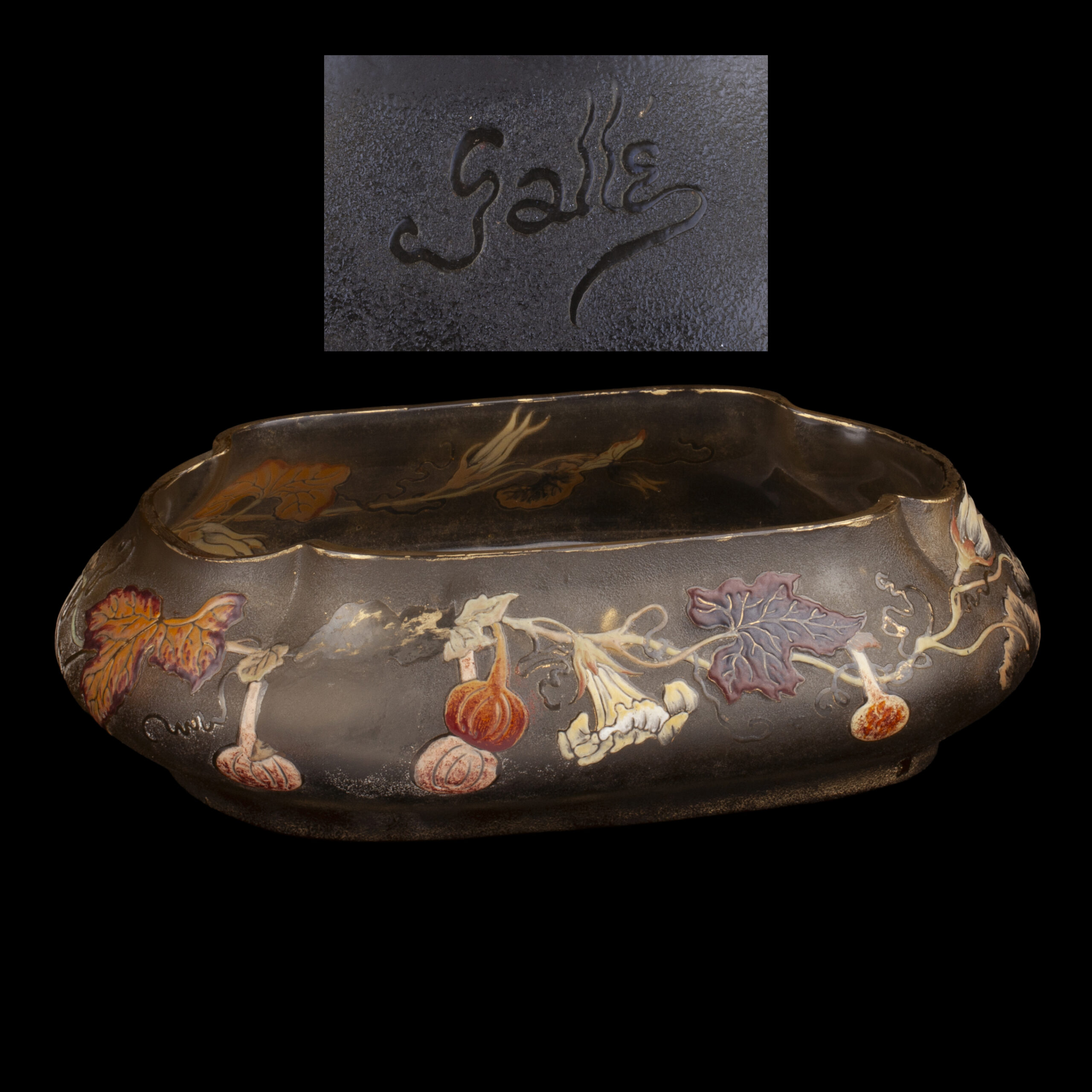
A prominent engraved Gallé signature is present on the exterior, confirming the manufacturer’s identification.
The combination of its generous dimensions, considerable weight, unusual oval form, complex botanical decoration and distinctive signature makes this a highly decorative, museum-quality example of French Art Nouveau glassmaking.
HISTORICAL BACKGROUND
Émile Gallé (1846–1904) was one of the most important French artists and master glassmakers of the Art Nouveau period.
Born in Nancy, Gallé developed an exceptional interest in botany, natural sciences, literature and decorative art. His knowledge of plants became a defining influence on his artistic work.
In 1877, Gallé assumed control of the family business and progressively transformed it into one of Europe’s leading centres of artistic glassmaking.
His creations frequently featured flowers, leaves, insects, fruits and woodland plants, rendered through sophisticated combinations of coloured glass, enamel decoration, engraving and acid etching.
At the Paris Exposition Universelle of 1889, Gallé received a Grand Prix for his glasswork, establishing his reputation as an internationally recognised artist.
In 1901, he became the founding president of the École de Nancy, an influential association of artists and craftsmen dedicated to the renewal of decorative arts through forms inspired by nature.
Gallé’s glassworks are particularly admired for their botanical accuracy, expressive compositions, technical innovations and the close relationship between the decorative subject and the form of the vessel.
The pumpkin vine motif of the present bowl belongs to the naturalistic artistic vocabulary characteristic of Gallé and the École de Nancy, where plants and seasonal changes were central themes.
MUSEUM COLLECTIONS
Important works by Émile Gallé are preserved in leading museums and public collections.
The Musée de l’École de Nancy, France, possesses a major reference collection of more than 400 works by Gallé, including exceptional examples of his glass production.
Among the museum’s celebrated objects are the bowl Roses de France (1901), the vase Les hommes noirs (1900) and the sculptural glass work Main aux algues et coquillages (1904).
These documented museum pieces demonstrate the importance of Gallé’s artistic glass within the history of European decorative arts. They provide historical and artistic context rather than identical comparisons with the present bowl.
The present example, with its ambitious oval format, autumnal pumpkin-vine decoration, polychrome detail and prominent Gallé signature, is a distinguished collector’s piece deserving comparison with museum-quality Art Nouveau decorative glass.
Manufacturer:
Émile Gallé, Nancy.
Origin:
Nancy, France.
Period:
Circa 1900, Art Nouveau.
Material:
Art glass with textured surface and polychrome botanical decoration.
Decoration:
Pumpkins, gourds, curling vines, autumn leaves and flowers.
Signature:
Engraved Gallé signature on the exterior.
Dimensions:
Height: 8.3 cm.
Width: 19 cm.
Length: 28 cm.
Weight:
1.78 kg.
Condition:
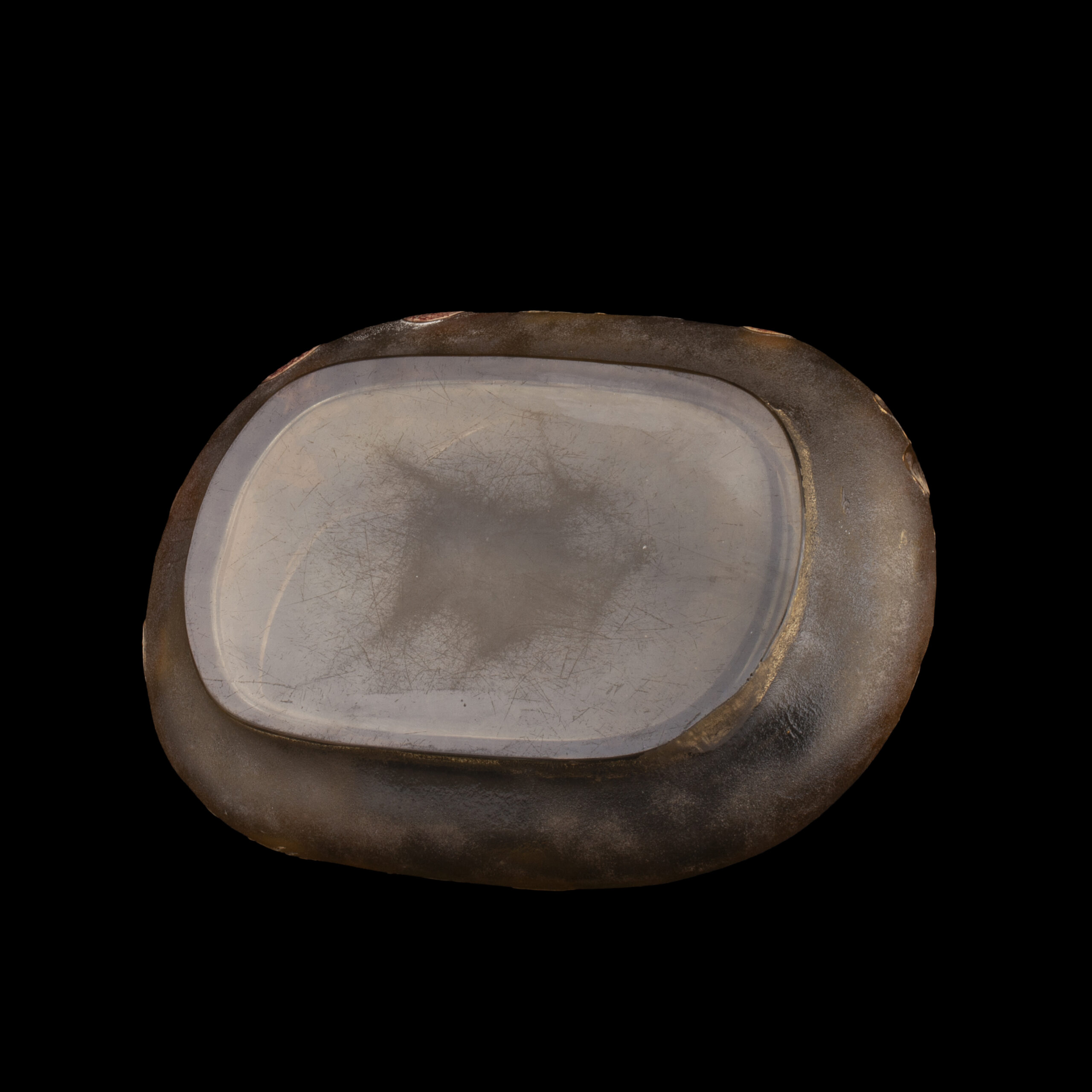
Age-related surface wear and scratches, including marks to the underside and some wear along the rim. Condition is shown in the photographs.
SKU: K1170.2.2.111026
Condition:
Age-related surface wear and scratches, including marks to the underside and some wear along the rim. Condition is shown in the photographs.
Period:
19th century
Material:
glass
Delivery:
Usually ship within 5 day(s) after clear payment received.
Location:
Tallinn
Purchase returns:
No Returns accepted
 +37256684125